Erosion Control
Why Sand Dunes Flood: Understanding Coastal Defence and Natural Buffers
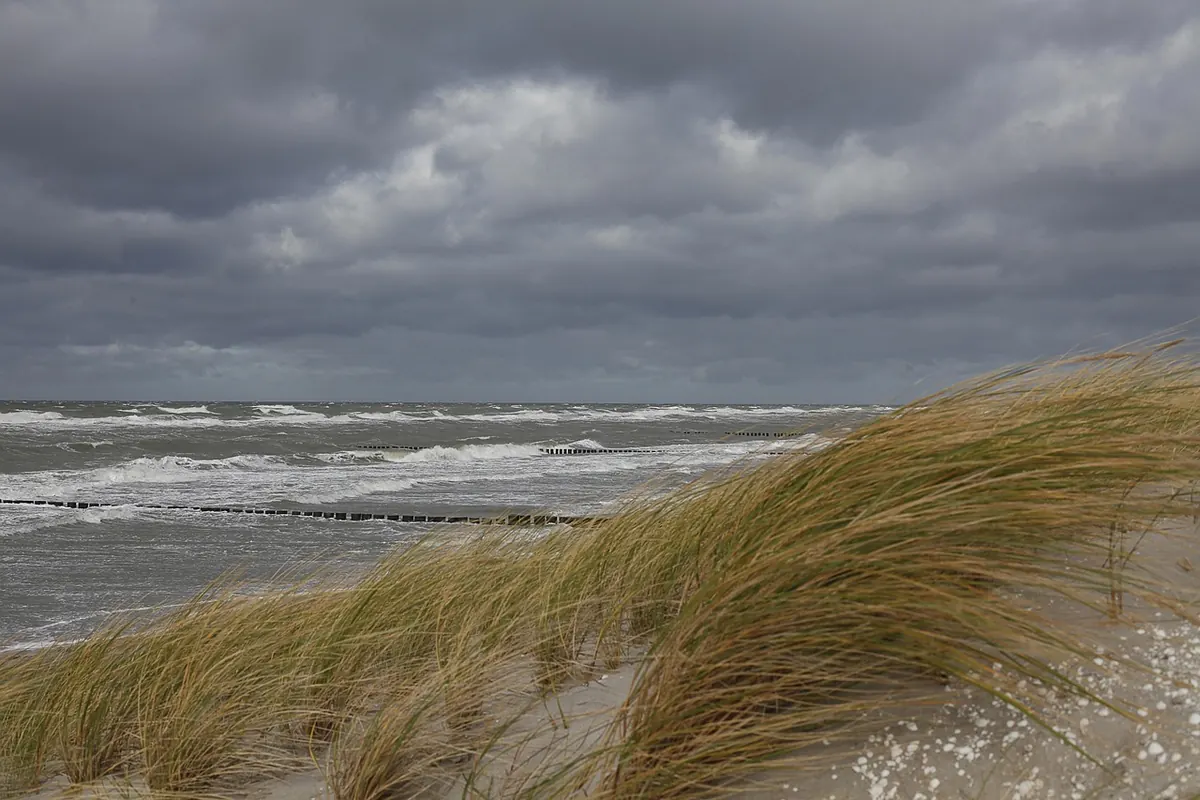
Walk out onto a dune ridge above a British beach in January and it can be hard to see the defence in it. No rock armour, no concrete, no wall. Just sand, marram grass and a few rabbit holes. Yet on the night of a big storm, that low ridge may be the only thing standing between the sea and the low ground behind it — the caravan park, the golf course, the lanes and gardens of the village. Dunes do a serious job of absorbing wave energy, and when they stop being able to, the flooding that follows is rarely a surprise to anyone who has watched that stretch of coast for a few winters.
How a dune system absorbs wave energy
A dune is not a barrier in the engineering sense. It is a moving store of sand, and its protection comes from the fact that it moves. Think of it as three working parts, each doing something different.
The beach is the first line
Waves arriving at the shore usually break somewhere on the beach, not at the dune. A wide, gently sloping beach forces waves to lose energy over a long distance, and water also percolates down into the sand rather than running straight back up the slope. Take the width away and the whole wave arrives at the dune instead.
The dune face is built to lose
When waves do reach the dune toe, they cut into the face and a small cliff — a scarp — forms. This looks alarming, but some of that sand is being moved into an offshore bar and along the beach. Bars and widened beaches then help dampen the next storm. Erosion and recovery are two halves of the same process.
The ridge and its vegetation hold the line
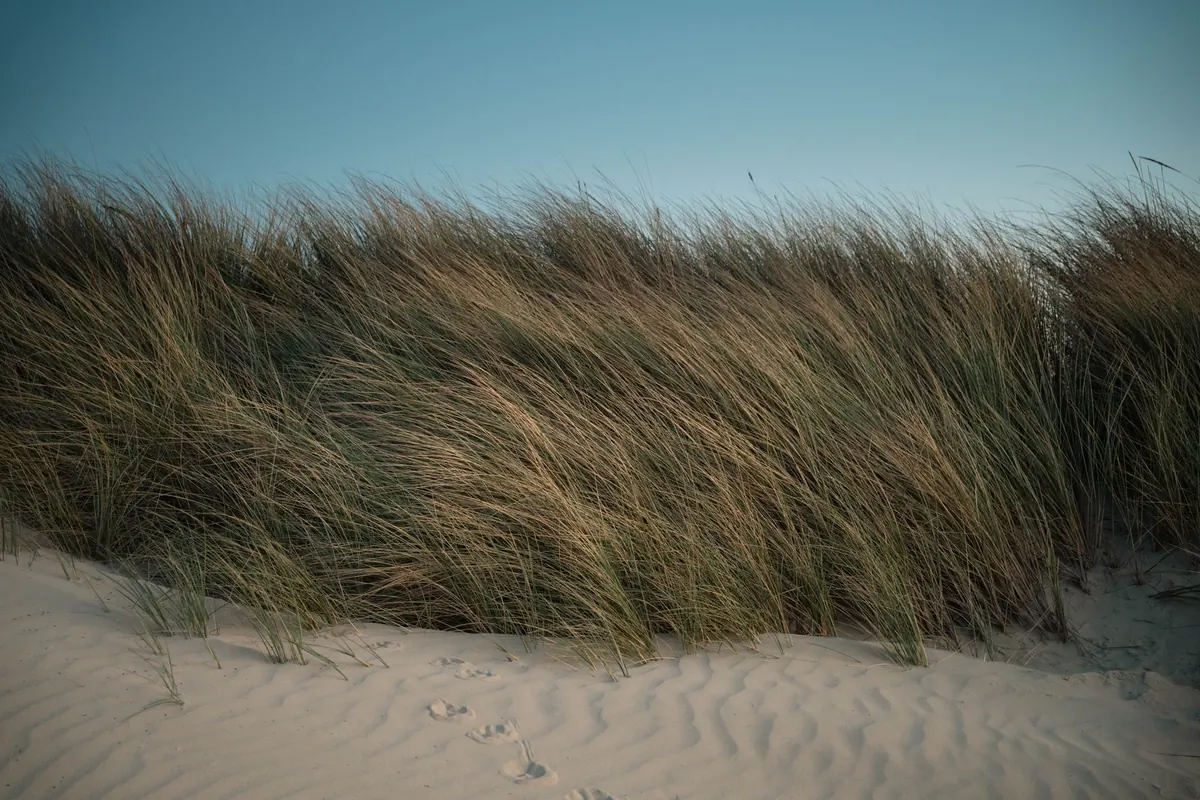
Marram grass traps wind-blown sand, building the dune upwards and seawards. Its roots and underground stems bind the sand so wind cannot simply strip it away. A dune with a healthy cover of marram, lyme grass and dune herbs is a dune that can repair itself after a battering, provided it has sand, space and time.
When dunes stop coping
Dunes fail when demand outstrips supply — when the sea delivers more energy than the system can absorb and replace. That can happen in a single tide or over decades. The usual culprits include:
- A narrow or steep beach. Less distance to lose energy, so more of the wave reaches the dune toe.
- High tide combined with a surge and onshore winds. The three together push water further up the profile than the dune face is used to.
- A cut-off sand supply. Groynes, harbour walls, dredging or a defended shoreline further up the coast can starve the beach that feeds the dune.
- Coastal squeeze. If something immovable sits behind the dunes, they cannot roll inland as sea levels rise and storms bite harder. The belt narrows until there is nothing left to lose.
- Blowouts and worn paths. Gaps in the vegetation let wind scour deep channels through the ridge, and those become the weak points water finds first.
- Waterlogged sand. Saturated dunes slump more easily, and in winter the water table in a dune system can sit surprisingly close to the surface.
The dune slack problem
The flooding that catches people out on a dune coast often is not a wave crashing over the ridge. It is water arriving from below and behind. Dune slacks — the damp hollows between ridges — sit close to the water table and fill quickly in a wet winter. They are also among the richest habitats on the coast, full of orchids, reeds and amphibians. Building on or draining them removes a natural reservoir and puts property in exactly the place water wants to be. Sand drains fast, but a high water table under a low hollow does not care how permeable the ground is.
Why natural buffers beat a single hard line
A sea wall does one thing very well: it holds a fixed line. But it reflects wave energy rather than absorbing it, it can scour the beach at its base, and it prevents the dune behind from migrating landwards. On coastlines where dunes are allowed to move, the same storm that flattens the front of a ridge often leaves the ridge further back, ready to rebuild. That is the difference between a defence that gets tired and a defence that renews itself.
Natural buffers also bring other things a wall cannot: habitat, space for recreation, water storage and, crucially, options. A wide dune belt gives everyone more room to adapt. That does not mean hard defences are never right — where homes, roads and infrastructure sit right behind the shore, a managed defence may be the only realistic answer. But it should be a decision made with the whole dune system in mind, not just the bit in front of the car park.
A dune that is allowed to move is a dune that can keep working.
What good dune management looks like
- Keep the beach wide. Anything that interrupts longshore drift takes sand from somewhere else along the coast.
- Leave the dune toe alone. Revetments and walls at the base of a dune stop it being eroded — and also stop it being fed.
- Protect the vegetation. No fires, no pulling marram, no cutting new paths through the ridge.
- Direct the feet. Boardwalks and defined routes across the dunes concentrate wear in one place instead of opening dozens of small blowouts.
- Repair with sand and plants, not concrete. Brushwood or chestnut paling fencing, transplanted marram and carefully sited thatch can all encourage a blowout to heal.
- Plan for roll-back. If the dune has nowhere to move, it will be squeezed out of existence. Space behind the ridge is part of the defence.
What you can do on your own patch
Start by learning the shape of your beach across the seasons. Pick two or three fixed points — a groyne end, a slipway, a particular dune scarp — and photograph them from the same spot every few weeks. A year of those images tells you more about whether your dunes are building, holding or retreating than any single storm does.
Then keep to the paths, keep dogs from digging in the dune face, take litter home (a plastic bottle buried in sand can smother marram for years) and report damage — fly-tipping, fires, broken fencing, new vehicle tracks — to the local authority or the coastal partnership responsible for that stretch. If you want to go further, join a beach or dune volunteer group; practical work days are usually advertised by wildlife trusts, local councils and coast care charities, and there is plenty of unglamorous but useful work to be done.
It is also worth asking what is planned for your coastline. Shoreline management plans, prepared by coastal groups with the Environment Agency, Natural Resources Wales or their equivalents, set out the intended approach for each stretch over the coming decades. Reading yours is the quickest way to find out whether the dunes near you are expected to hold, move or be replaced. Where property, safety or flood insurance is at stake, take advice from your local authority and the relevant flood authority rather than relying on guesswork from the beach.
Dunes do not stop the sea. They take its energy, lose some of themselves, and rebuild when they can. Give them width, sand and undisturbed ground, and they will go on doing that work long after the concrete has started to crack.
Photo: ptra / Pixabay
Related Articles